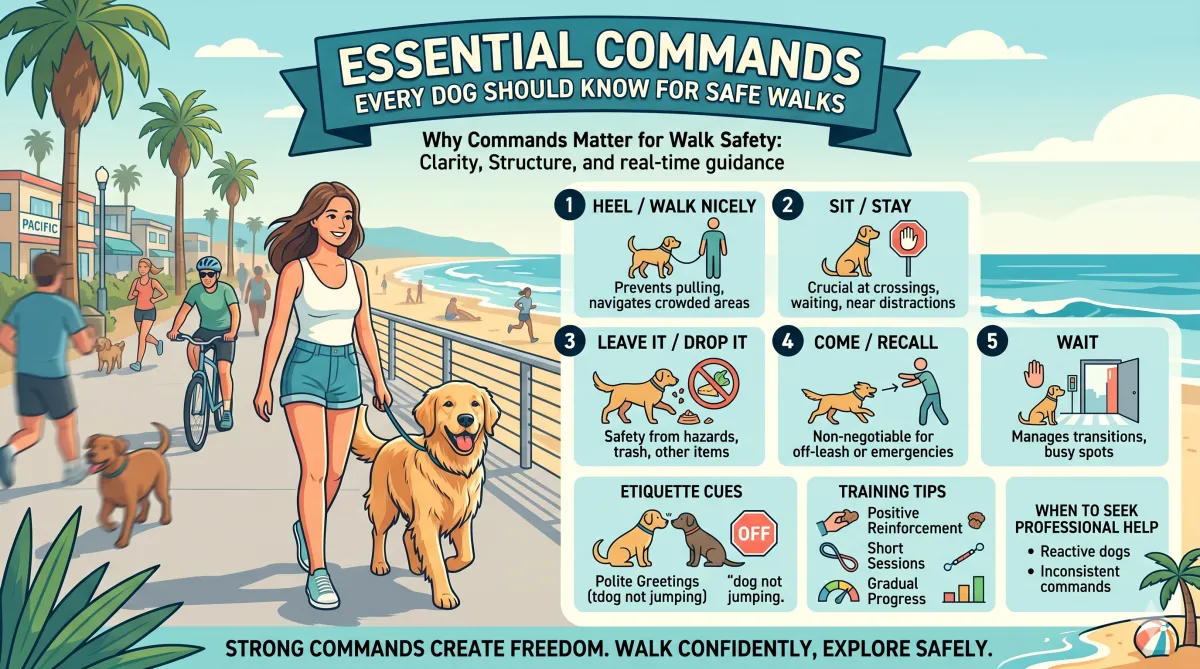
Essential Commands Every Dog Should Know for Safe Walks
Why Commands Matter for Walk Safety
Walking your dog in a place like Pacific Beach isn’t just a casual activity, it’s a dynamic environment filled with distractions, movement, and unpredictability.
From busy boardwalks to beach crowds and passing cyclists, your dog is constantly processing stimuli. Without clear communication, that can quickly turn into pulling, lunging, or unsafe situations.
That’s where commands come in.
They create structure. They give your dog clarity. And most importantly, they allow you to guide behavior in real time.
The result?
A walk that feels controlled, calm, and actually enjoyable for both of you.
Top Commands for Safe Walks
A handful of core commands can completely transform your walking experience.
Heel / Walk Nicely: Keeps your dog close to your side and prevents constant leash pulling. This is foundational for navigating crowded areas.
Sit / Stay: Essential for moments that require pause: crossing streets, waiting at corners, or stopping near distractions.
Leave It / Drop It: Critical for safety. Whether it’s food scraps, trash, or something hazardous on the ground, this command prevents dangerous ingestion.
Come / Recall: Non-negotiable for off-leash scenarios or emergencies. A reliable recall can override distractions and bring your dog back immediately.
Wait: Useful for managing transitions: doorways, crosswalks, or when approaching other dogs, runners, or bikes.
These commands aren’t just obedience tools, they’re safety mechanisms.
Commands for Socialization and Etiquette
In social environments like beaches, parks, and patios, behavior matters just as much as control.
Polite Greetings: Teaching your dog to approach calmly (instead of rushing or jumping) sets the tone for safe interactions with people and other dogs.
“Off” or “No Jump”: Prevents unwanted jumping, especially in crowded or high-traffic areas.
These cues help your dog integrate into social settings without creating stress for you, your dog, or others around you.
And in a place like Pacific Beach, where dogs are part of everyday life, that kind of behavior makes all the difference.
Tips for Training and Reinforcing Commands
Training doesn’t have to be complicated but it does need to be consistent.
Use Positive Reinforcement
Reward desired behavior with treats, praise, or play. Dogs learn faster when the experience is rewarding.Keep Sessions Short and Practical
Incorporate commands naturally during walks instead of isolating long training sessions.Progress Gradually
Start in low-distraction environments, then slowly introduce more challenging settings like busier areas of Pacific Beach.
Real-world exposure is key. A command that works at home needs to work on a crowded sidewalk too.
When to Seek Professional Help
Some dogs need more structured guidance and that’s completely normal.
You might benefit from professional support if:
Your dog is highly distracted or reactive
Commands aren’t consistent outside the home
You’re managing multiple dogs at once
Professional dog walkers and trainers don’t just walk your dog; they reinforce structure, consistency, and proper behavior during every outing.
That means your dog isn’t just getting exercise, they’re improving with every walk.
At the end of the day, strong commands create freedom.
Freedom to walk confidently.
Freedom to explore safely.
Freedom to enjoy places like Pacific Beach without stress.
And that’s what every great walk should feel like.
