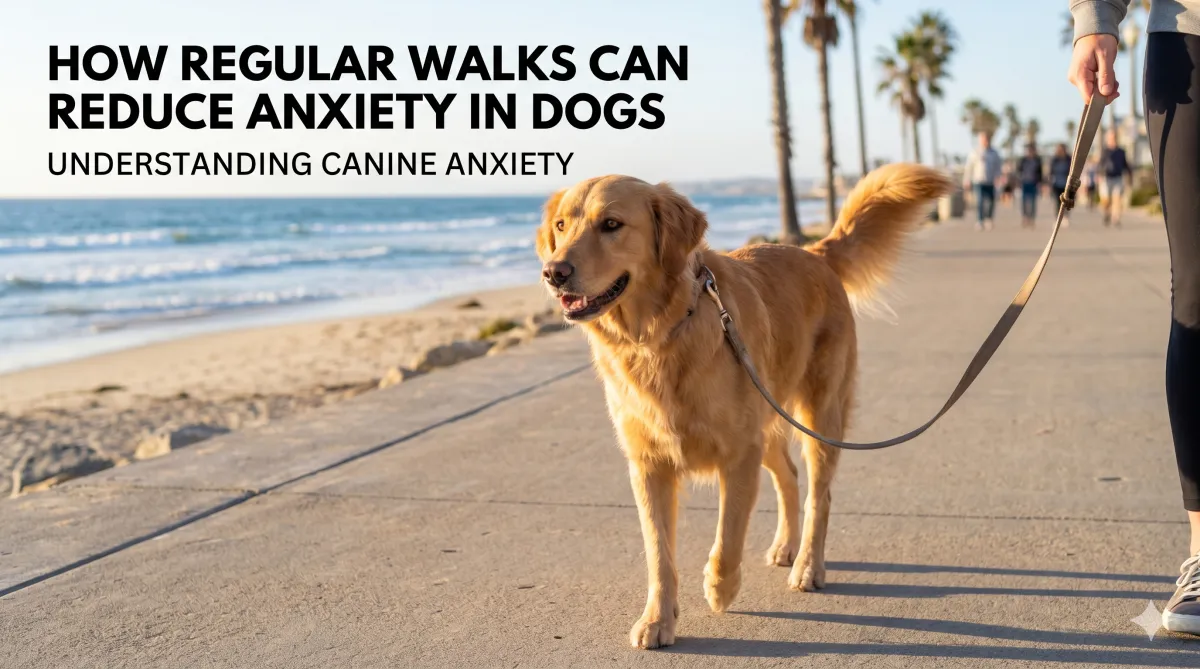
How Regular Walks Can Reduce Anxiety in Dogs
Understanding Canine Anxiety
Anxiety in dogs isn’t always obvious at first but it often shows up in behavior.
Common signs include:
Pacing or inability to settle
Excessive barking or whining
Destructive chewing or digging
Restlessness even after activity
Over time, untreated anxiety affects more than behavior. It can impact physical health, sleep quality, appetite, and overall emotional stability.
Dogs need more than basic care, they need structure, stimulation, and routine movement to stay balanced.
Daily activity plays a critical role in regulating stress and preventing anxiety from building up.
Physical Exercise as a Stress Reliever
One of the fastest ways to reduce anxiety in dogs is simple: movement.
Regular walks help:
Burn excess energy that would otherwise turn into nervous behavior
Improve cardiovascular health and overall physical conditioning
Support better sleep patterns and calmer behavior at home
A dog that has properly exercised is less likely to react impulsively or display stress-driven behaviors.
Physical activity isn’t just an outlet, it’s a stabilizer.
Mental Stimulation Through Exploration
Anxiety often increases when dogs are under-stimulated or exposed to repetitive environments.
Walks change that completely.
Every outing introduces:
New smells and sensory input
Different sounds and movement patterns
Varied terrain and environmental conditions
This kind of exploration challenges the brain in a healthy way, reducing sensitivity to unfamiliar situations.
In places like Pacific Beach, this effect is even stronger. Ocean breezes, boardwalk activity, shifting crowds, and changing routes all contribute to consistent cognitive engagement.
The result is a dog that becomes more adaptable, less reactive, and more confident over time.
The Social Benefits of Walks
Social anxiety is a major component of overall canine stress and walks help address it directly.
When done correctly, walks provide:
Controlled exposure to other dogs and people
Opportunities for calm, positive interactions
Gradual confidence building in real-world environments
Group walks or structured pack experiences can be especially effective for dogs that need extra social development.
Instead of overwhelming situations, dogs learn at their own pace, building trust and reducing fear over time.
Social stability is one of the strongest predictors of long-term behavioral balance.
Tips for Maximizing Anxiety-Reducing Walks
To get the most out of walks as an anxiety-reduction tool, consistency matters.
Keep a routine
Walking at the same time each day creates predictability, which helps reduce stress.Vary your routes
Different environments provide new stimulation and prevent boredom.Move at your dog’s pace
Avoid rushing—allow time for sniffing and exploration, which are naturally calming behaviors.Consider professional support
If your schedule is inconsistent, professional dog walkers can ensure your dog still receives daily, structured walks that support emotional balance.
Regular walks aren’t just exercise, they’re therapy in motion.
With consistency, structure, and the right environment like Pacific Beach, you can significantly reduce anxiety and help your dog feel calmer, more confident, and more secure every day.
