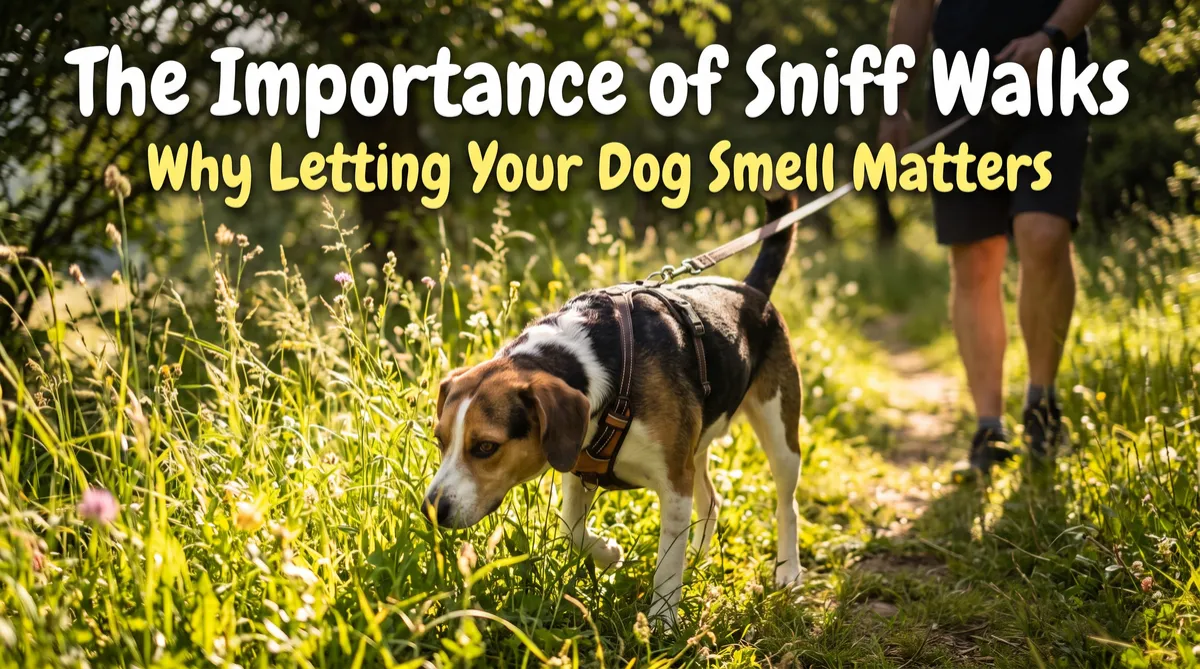
The Importance of Sniff Walks: Why Letting Your Dog Smell Matters
Many people think the purpose of a dog walk is exercise, but for dogs, walking is also about exploring the world through scent. A "sniff walk" allows your dog to slow down, investigate their surroundings, and process information using their most powerful sense. These walks provide valuable mental enrichment and can leave your dog feeling calmer and more satisfied than a fast-paced walk focused only on distance.
Key Takeaways:
Sniffing is a natural behavior that supports canine mental health.
Mental enrichment can be just as important as physical exercise.
Allowing time to sniff often leads to calmer, more satisfied dogs.
Why is sniffing so important for dogs?
Dogs experience the world primarily through their noses.
While humans rely heavily on vision, dogs gather information by scent. Every smell tells them something about the environment, including which animals have been nearby, changes in their surroundings, and even the emotional state of other dogs.
Preventing dogs from sniffing throughout an entire walk can make the experience far less enriching.
The American Kennel Club explains that sniffing is how dogs gather and interpret information about the world. Giving them opportunities to sniff provides important mental stimulation and allows them to engage in natural behaviors.
Are sniff walks better than regular walks?
Not necessarily—they serve different purposes.
A brisk walk provides physical exercise, while a sniff walk focuses on mental enrichment. The healthiest routine usually includes both.
During a sniff walk:
Your dog chooses where to explore.
The pace is slower.
Stopping to investigate scents is encouraged.
Distance is less important than the experience.
The American Kennel Club notes that sniffing can mentally tire dogs and that even a 20- to 30-minute sniff-focused walk may leave some dogs as satisfied as a much longer traditional walk.
How do sniff walks improve your dog's behavior?
Mental stimulation helps satisfy your dog's natural instincts.
Dogs that regularly have opportunities to sniff often return home feeling more relaxed because they have spent time solving problems, making choices, and exploring their environment.
Sniff walks may also help reduce boredom, frustration, and excess energy that sometimes contribute to unwanted behaviors.
The American Animal Hospital Association (AAHA) recommends sensory enrichment such as sniff walks because allowing dogs to use their noses helps reduce stress and frustration while supporting emotional well-being.
For your dog, every interesting scent tells a story. A walk becomes much richer when they're allowed to read it.
How can you include more sniff time in your walks?
Adding sniff time is easy.
Instead of trying to keep your dog in a perfect heel for the entire outing, allow periods where they can safely explore at their own pace.
Some simple ideas include:
Visit quiet parks or neighborhood streets.
Use a longer leash where it's safe and permitted.
Let your dog choose the direction occasionally.
Schedule walks when you're not rushed.
Mix brisk walking with dedicated sniff breaks.
The American Kennel Club recommends incorporating regular "sniffy walks" into your routine, allowing dogs to determine the pace and direction whenever it's safe. This type of walk promotes relaxation, supports focus, and provides meaningful mental enrichment.
The best walk isn't always the fastest one. Sometimes it's the one with the most interesting smells.
FREQUENTLY ASKED QUESTIONS
Q: Will letting my dog sniff make them pull on the leash?
A: Not if it's done with structure. Many owners use designated sniff breaks while also practicing loose-leash walking. Dogs can learn when it's time to walk with purpose and when they're free to explore.
Q: How long should a sniff walk last?
A: Quality matters more than distance. Many dogs benefit from 20 to 30 minutes of relaxed sniffing, though the ideal length depends on your dog's age, health, and energy level.
Q: Are sniff walks good for senior dogs?
A: Yes. Because sniff walks emphasize mental enrichment over physical intensity, they're an excellent option for many senior dogs or dogs with limited mobility who still enjoy exploring their environment.
Q: Can puppies benefit from sniff walks?
A: Absolutely. Puppies learn about the world through exploration. Safe, age-appropriate sniff walks help build confidence, encourage healthy curiosity, and provide valuable mental stimulation during important developmental stages.
Give Your Dog Time to Explore
Every walk is an opportunity for your dog to exercise both body and mind.
At Dog Walker Pacific Beach, we believe walks should be enriching—not rushed. Our professional dog walkers understand the value of allowing dogs to safely sniff, explore, and enjoy their surroundings while maintaining good leash manners and prioritizing safety.
Whether your dog loves energetic adventures or slow, scent-filled strolls, we'll tailor every walk to their personality and needs. Contact Dog Walker Pacific Beach today to learn how our personalized walking services help dogs stay active, engaged, and happy.
