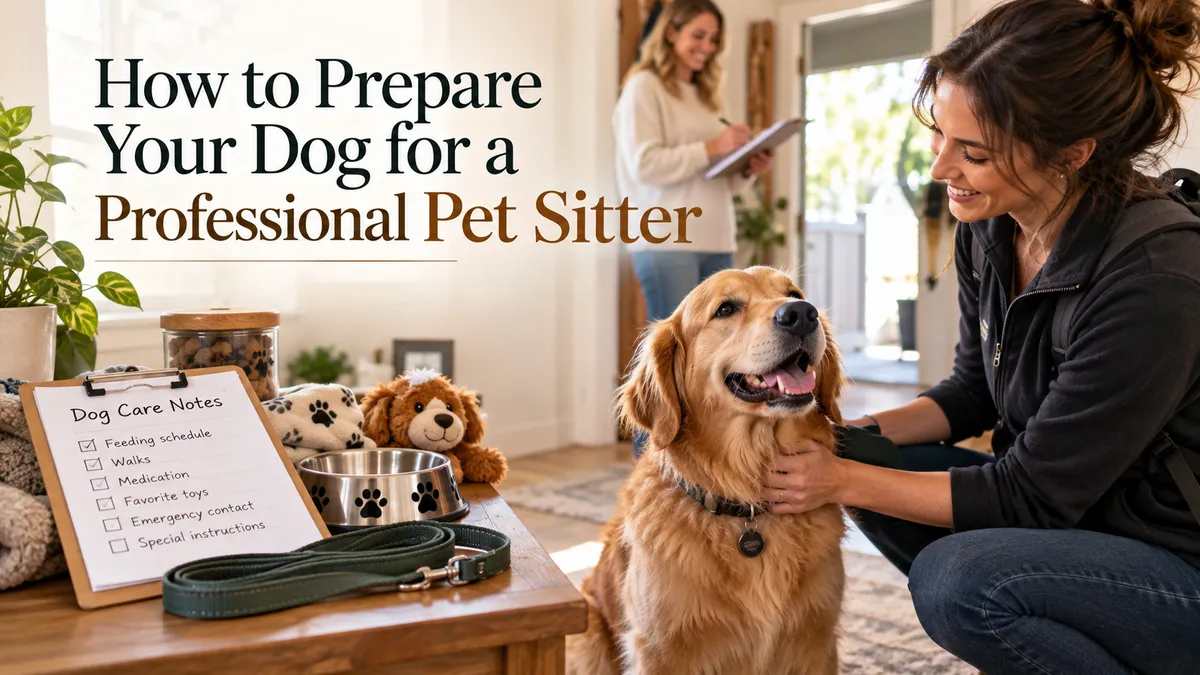
How to Prepare Your Dog for a Professional Pet Sitter
Preparing your dog for a professional pet sitter starts long before you leave home. A little planning helps your dog feel secure, reduces anxiety, and allows the sitter to provide safe, consistent care. Dogs adapt more easily when their routine, environment, and expectations remain familiar.
Key Takeaways
Introduce your dog to the sitter before the first visit whenever possible.
Leave detailed instructions about routines, feeding, medications, and behavior.
Keep your dog's schedule as consistent as possible while you're away.
Why should you introduce your dog to the pet sitter before leaving?
Yes. A meet-and-greet is one of the most important parts of preparing your dog.
Dogs rely on familiarity. Meeting a new person for the first time while their owner suddenly disappears can create unnecessary stress. A short introduction allows your dog to associate the sitter with positive experiences before the actual service begins.
Schedule the meeting several days before your trip if possible. Let your dog approach the sitter naturally instead of forcing interaction. Reward calm behavior with praise or treats.
During the visit, the sitter can observe your dog's personality, energy level, walking habits, favorite toys, and comfort around strangers. This information helps create a smoother experience on future visits.
According to the American Veterinary Medical Association, maintaining familiar routines and minimizing environmental changes can help reduce stress in pets during owner absences.
What information should you leave for a professional pet sitter?
The more information you provide, the easier it is for the sitter to care for your dog confidently.
Create a written guide instead of relying on memory. Even experienced professionals appreciate having important details available in one place.
Include information such as:
Feeding schedule and food portions
Walking routine and preferred routes
Bathroom schedule
Medications and dosage instructions
Emergency veterinarian contact
Favorite toys and games
Sleeping habits
Commands your dog understands
Triggers or fears
Allergies or medical conditions
Emergency contacts
If your dog has specific behaviors, explain them honestly.
For example:
Pulls on the leash
Becomes nervous around bicycles
Dislikes loud trucks
Guards food
Loves playing fetch
Needs slow introductions to unfamiliar dogs
Small details often prevent misunderstandings and help the sitter respond appropriately.
A well-prepared pet sitter can only provide exceptional care when they understand your dog's unique routine, personality, and needs.
How can you help your dog feel comfortable while you're away?
Keeping life predictable is the best way to reduce anxiety.
Dogs thrive on routine. Sudden changes in feeding times, walks, or sleeping arrangements can increase stress, especially when their owner is absent.
Try to keep:
Meal times consistent
Walk schedules unchanged
Favorite toys available
Bedding in its normal location
Crate routine the same
Household rules unchanged
Leave familiar scents around the home. Blankets, beds, and favorite toys provide comfort because they smell like home.
Avoid introducing major changes immediately before your trip. This is not the ideal time to switch foods, begin intensive training, or rearrange your dog's environment.
Research published by the American Kennel Club also emphasizes consistency and positive introductions when helping dogs adjust to new caregivers and temporary routine changes.
What should you prepare around your home before the sitter arrives?
A little organization makes every visit safer and more efficient.
Before leaving, gather all essential supplies in one accessible location.
Your preparation checklist should include:
Food and treats
Leash and harness
Waste bags
Medications
Cleaning supplies
Extra towels
Favorite toys
Water bowls
Food bowls
Crate or playpen if used
Double-check that gates, fences, and doors close securely.
If your dog wears identification tags, confirm that the information is current. Microchip registration should also be up to date.
Tell your sitter where to find:
Flashlights
Fuse box
Water shutoff if necessary
Veterinary records
Emergency phone numbers
The goal is to eliminate guesswork during every visit.
Preparation creates confidence for your dog, your pet sitter, and you.
According to the Centers for Disease Control and Prevention, proper identification and emergency planning are important parts of responsible pet ownership, especially when another caregiver is involved.
FREQUENTLY ASKED QUESTIONS
Q: How early should my dog meet a professional pet sitter?
A: Ideally, your dog should meet the sitter several days before your trip. Even one introductory visit can help build familiarity and reduce anxiety. If your dog is naturally cautious around strangers, scheduling two or three short visits may help create a stronger level of comfort before you're away.
Q: Should I leave written instructions even if I already explained everything?
A: Yes. Written instructions prevent misunderstandings and ensure nothing is forgotten. Include feeding amounts, medication schedules, emergency contacts, walking preferences, behavioral notes, and your veterinarian's information. A written guide allows the sitter to respond quickly if questions arise during your absence.
Q: What if my dog is anxious around new people?
A: Introduce the sitter gradually using positive reinforcement. Allow your dog to approach at their own pace without pressure. Keep initial interactions calm and brief, and reward relaxed behavior with treats or praise. Consistency helps many dogs become more comfortable after a few positive visits.
Q: Is it okay to change my dog's routine before a vacation?
A: It's usually best to avoid major routine changes right before leaving. Keeping feeding times, walks, sleeping arrangements, and household rules consistent helps your dog feel more secure. Familiar routines make the transition easier and reduce the likelihood of stress-related behaviors.
Ready to Leave Home with Confidence?
Whether you're planning a weekend getaway or an extended vacation, preparing your dog properly makes every pet-sitting visit safer and more enjoyable.
At Dog Walker Pacific Beach, we believe great pet care starts before the first visit. Our experienced team takes the time to understand your dog's routine, personality, and individual needs so they receive compassionate, reliable care while you're away.
Contact Dog Walker Pacific Beach today to schedule a meet-and-greet and give your dog the confidence of familiar, professional care.
