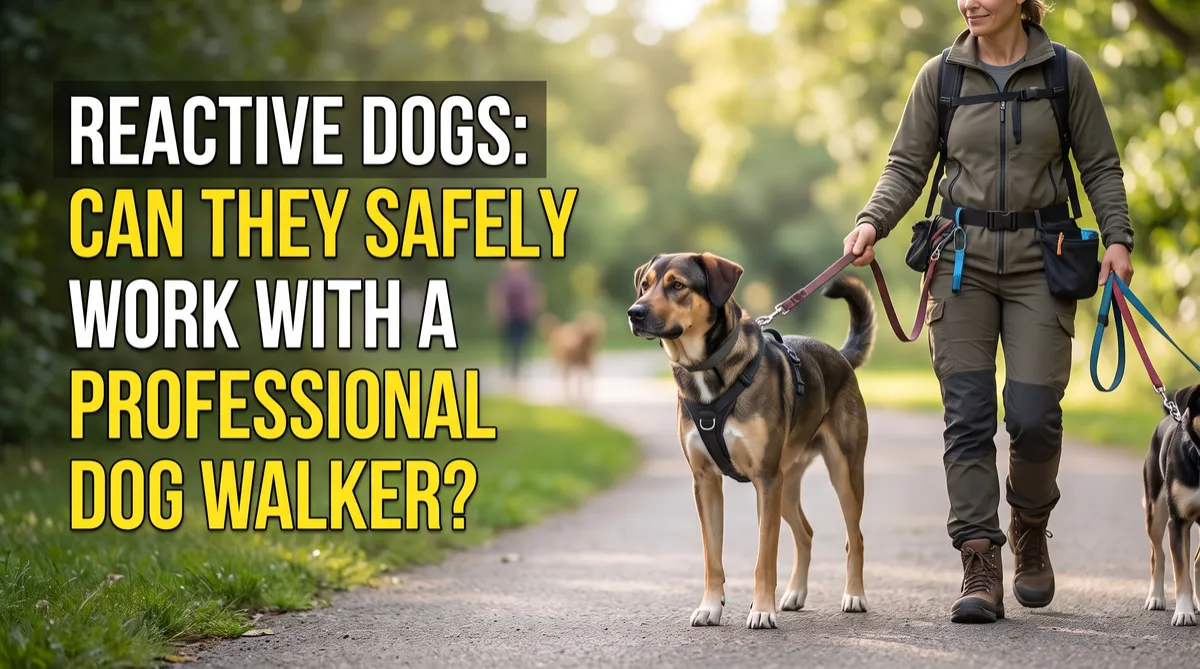
Reactive Dogs: Can They Safely Work With a Professional Dog Walker?
Yes, many reactive dogs can safely work with a professional dog walker. The key is finding someone with experience handling reactive behavior, understanding your dog's triggers, and following a consistent management plan. A thoughtful approach can make walks safer, less stressful, and more enjoyable for both dogs and their owners.
Key Takeaways:
Reactive dogs often benefit from structured, predictable walks.
An experienced walker learns your dog's triggers before the first outing.
Management and consistency are more important than forcing social interactions.
What does it mean if a dog is reactive?
Reactivity is not the same as aggression.
A reactive dog has an exaggerated response to certain situations or triggers. That response may include barking, lunging, growling, whining, or pulling on the leash.
Common triggers include:
Other dogs
Bicycles
Skateboards
Joggers
Strangers
Cars
Loud noises
Many reactive dogs are fearful, frustrated, or overstimulated, not aggressive.
The American Kennel Club explains that reactive behavior is often driven by emotion rather than an intent to harm, making proper management and training essential.
Can a professional dog walker safely handle a reactive dog?
Yes, but experience matters.
Not every dog walker is comfortable working with reactive dogs, and that's okay. A qualified professional will ask detailed questions before accepting the job.
Expect questions about:
Your dog's triggers
Previous incidents
Equipment your dog uses
Commands your dog knows
Preferred walking routes
Safe distances from triggers
Reward preferences
An experienced walker won't intentionally expose your dog to situations they cannot handle. Instead, they'll choose quieter routes, increase distance from triggers, and focus on helping your dog remain below their stress threshold.
The Certification Council for Professional Dog Trainers (CCPDT) encourages owners to work with qualified professionals who use science-based, reward-focused methods and understand canine behavior.
How should the first walk be handled?
The first walk should move at your dog's pace.
Many reactive dogs need time to observe a new person before feeling comfortable. A professional walker should never rush introductions or force interaction.
Instead, the first visit often includes:
Meeting your dog calmly
Reviewing equipment
Observing body language
Walking in a quiet area
Avoiding crowded locations
Using rewards when appropriate
The goal is not perfect behavior.
The goal is helping your dog finish the walk feeling safe and successful.
Success for a reactive dog isn't measured by how many people or dogs they pass. It's measured by how comfortable they feel during the walk.
How can owners help set their dog up for success?
Honest communication is one of the most valuable things you can provide.
Tell your walker exactly what situations cause your dog to react, even if they seem minor.
It's also helpful to explain:
What your dog enjoys
What makes them nervous
Which rewards work best
How they recover after reacting
Any cues or commands they already know
The more information your walker has, the easier it becomes to create predictable, positive experiences.
The Fear Free Pets program emphasizes reducing fear, anxiety, and stress by recognizing an animal's emotional state and adapting handling techniques to keep experiences as positive as possible.
Reactive dogs don't need someone stronger holding the leash, they need someone who understands what they're communicating.
FREQUENTLY ASKED QUESTIONS
Q: Can reactive dogs still enjoy walks?
A: Absolutely. Most reactive dogs still benefit from regular walks. The key is choosing appropriate environments, avoiding unnecessary triggers, and keeping walks calm and predictable. Exercise and mental stimulation remain important for their overall well-being.
Q: Should a reactive dog socialize with every dog they meet?
A: No. Many reactive dogs are happier when they are not expected to greet unfamiliar dogs. Maintaining a comfortable distance often creates a safer and more positive experience than forcing interactions.
Q: What equipment works best for reactive dogs?
A: The safest equipment depends on your dog's size, behavior, and training history. Many professionals recommend a properly fitted front-clip or well-fitted harness paired with a secure leash. Avoid equipment that causes pain or relies on punishment unless specifically recommended by a qualified behavior professional.
Q: Can a professional dog walker help improve reactive behavior?
A: A professional walker can reinforce consistent routines, avoid situations that trigger reactions, and help maintain good walking habits. However, severe reactivity or behavior modification should be addressed with a qualified trainer or veterinary behaviorist working alongside your dog's daily care routine.
Compassionate Walks for Every Personality
Every dog deserves to enjoy their daily walk, including dogs who need a little extra patience.
At Dog Walker Pacific Beach, we understand that no two dogs are alike. We take the time to learn each dog's personality, recognize their comfort level, and create walking experiences that prioritize safety, confidence, and trust.
If your dog is reactive, shy, or easily overwhelmed, we're happy to discuss their individual needs and determine whether our services are the right fit. Contact Dog Walker Pacific Beach today to learn how thoughtful, professional care can make every walk a more positive experience.
